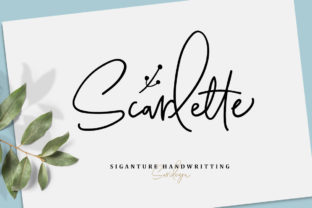
Scarlette Script: The Handwritten Font That Brings Your Brand to Life
There's a particular feeling you get when you see a design that just works—when the typography doesn't just sit there but actually communicates something. Maybe it's a wedding invitation that feels intimate before you even read the words. Maybe it's a logo that tells you everything about a brand's personality in a single glance. That kind of visual magic often comes down to one critical choice: the font. And if you've been searching for a typeface that carries genuine warmth, personality, and versatility, Scarlette Script deserves your attention.
At its core, Scarlette Script is a natural signature script—a font designed to mimic the fluid, organic rhythm of real handwriting. But what sets it apart from the dozens of script fonts flooding design marketplaces is its thoughtful craftsmanship. The extensive ligature collection means letters connect the way they naturally would when you pick up a pen. There are no awkward joins, no robotic transitions between characters. Each word you type flows with an authenticity that's surprisingly hard to find in digital typography.
Beyond the script itself, Scarlette includes a doodle font—a complementary set of hand-drawn decorative elements. Think of it as a toolkit for building complete visual stories. You're not just getting a typeface; you're getting a design system that lets you craft logos, brand marks, and decorative compositions without needing to source additional illustration assets.
Why Natural Script Fonts Matter for Real Projects
If you've spent any time working on branding or marketing materials, you already know that fonts carry emotional weight. A rigid sans serif communicates efficiency and modernity. A classic serif suggests tradition and authority. But a script font like Scarlette Script? It communicates humanity. It says there's a real person behind this brand, this invitation, this message.
That emotional resonance is exactly why script fonts have become staples across so many industries. Wedding planners use them to evoke romance and personal connection. Boutique shop owners rely on them to signal craftsmanship and care. Content creators reach for handwritten fonts to make their social media graphics feel approachable rather than corporate. The psychology is straightforward: handwriting feels personal, and personal builds trust.
But here's the challenge most people run into. Plenty of script fonts look beautiful in a specimen preview but fall apart in actual use. Letters collide in weird ways. Capital letters don't connect smoothly to lowercase. The overall texture feels repetitive because there's no variation in how characters link together. This is precisely where Scarlette Script's ligature system earns its value. Those thoughtfully designed letter combinations prevent the mechanical look that plagues so many script typefaces, giving your text a genuinely hand-lettered appearance.
Putting Scarlette Script to Work Across Your Projects
Let's talk about where this font actually shines in practice, because versatility is one of its strongest qualities.
Logo Design and Brand Identity
A logo built with Scarlette Script immediately communicates warmth and personality. It works beautifully for businesses that want to feel approachable—think bakeries, florists, photography studios, lifestyle brands, artisan product lines, and personal coaching practices. The included doodle font adds another layer here. You can pair the script with hand-drawn flourishes, borders, or icons to create a cohesive brand mark that feels complete without needing a separate illustration.
Wedding Invitations and Event Stationery
This is probably the most natural home for a font like Scarlette. Wedding invitations, save-the-dates, RSVP cards, menu cards, table numbers—any piece of stationery that benefits from an elegant, personal touch. The script's flowing connections give formal text a romantic quality while remaining sophisticated enough for upscale events. It pairs well with clean serif or sans serif fonts for body text, letting you build a complete typographic hierarchy within your invitation suite.
Packaging and Product Design
Small-batch product makers and direct-to-consumer brands often struggle with packaging that feels generic. Scarlette Script offers a quick path to differentiation. Use it for product names, taglines, or accent text on labels, boxes, and bags. A handmade soap company, for instance, could use the script for the product name while setting ingredient lists and instructions in a simple sans serif. The contrast creates visual interest and reinforces the artisan positioning.
Social Media Graphics and Digital Content
On platforms where you have roughly two seconds to stop someone from scrolling, distinctive typography is a secret weapon. Scarlette Script works well for quote graphics, sale announcements, story templates, and branded content overlays. It's particularly effective for Instagram, Pinterest, and lifestyle blogs where visual personality directly impacts engagement. Just be mindful of sizing—script fonts generally perform best at larger sizes where their details remain legible on small screens.
Print Materials and Editorial Layouts
Magazine headers, pull quotes, poster headlines, book covers, and business cards all benefit from a display font with character. Scarlette Script functions as an excellent headline or accent typeface in editorial design. You wouldn't set an entire paragraph in it—that's true of most script fonts—but for short, impactful text moments, it delivers real visual punch.
Making Smart Typography Decisions
Having a beautiful font is one thing. Using it effectively is another. Here are some practical considerations worth keeping in mind as you work with Scarlette Script or any premium font in your projects.
Pair it intentionally. Script fonts rarely work well in isolation. They need a partner—a clean, readable typeface for supporting text. Try pairing Scarlette Script with a geometric sans serif for a modern contrast, or with a transitional serif for something more classic. The goal is balance: let the script carry the personality while the secondary font handles the heavy lifting of longer text passages.
Respect readability limits. This matters more than almost anything else. Scarlette Script is a display font, designed for short-form text like headlines, logos, and accent phrases. Setting body copy in any script font—no matter how well-designed—is almost always a readability mistake. Use it strategically for emphasis, not as your default text setting.
Test at your actual size. Fonts can look dramatically different at 72 points versus 14 points. Before committing to a typeface for a specific application, test it at the size you'll actually use. A script that looks gorgeous in a logo might lose its charm when squeezed onto a small product label. Scarlette Script's generous letterforms hold up reasonably well at moderate sizes, but always verify in your own context.
Consider your audience. A handwritten script font resonates strongly with certain demographics and industries but might feel out of place in others. A fintech startup's annual report probably isn't the right venue. A children's boutique, a wellness brand, a creative agency, a wedding venue—these are contexts where Scarlette Script feels natural and appropriate.
Review the full character set. Before starting a project, explore everything the font includes. Beyond standard letters and numbers, look at the available ligatures, alternates, and the doodle font. Understanding your full toolkit upfront prevents you from missing design opportunities and ensures you're using the typeface to its full potential.
Building a Cohesive Visual Language
One of the most overlooked aspects of working with creative fonts is consistency. When you find a typeface that genuinely fits your brand or your client's brand, resist the urge to switch fonts constantly. Visual consistency across touchpoints—website, social media, packaging, print materials—builds recognition over time. People start to associate that particular typographic voice with your business.
Scarlette Script works particularly well as a signature element within a broader typographic system. Think of it as your brand's accent font: the typeface you use for your logo, your tagline, your headers, and your special moments. Pair it with a consistent sans serif or serif for everything else, and you've built a type system that feels cohesive without being monotonous.
This approach also makes your design work faster. Once you've established which font handles what role, you're not starting from scratch every time you create a new piece of content. You have a framework. You know the script goes here, the clean font goes there, and the result looks intentional rather than improvised.
For anyone building a brand from scratch or refreshing an existing visual identity, investing in a thoughtfully designed script typeface like this one is a practical decision with lasting returns. It gives you a versatile design asset that works across dozens of applications—from the business card you hand out at networking events to the Instagram story you post on a Tuesday afternoon.
The right typography doesn't just make things look better. It makes your message clearer, your brand more memorable, and your work more professional. And sometimes, the difference between a design that connects and one that doesn't comes down to finding a font that feels genuinely human.